Tailor Craft: A Display Font That Elevates Small Business Branding
Refreshing a Café Menu with a Friendly, Eye-Catching Typeface
Recently, I helped a local café owner refresh their menu design. They wanted something that felt warm and inviting, but still professional enough to match their modern interior. After reviewing several fonts, we landed on Tailor Craft—and the result was exactly what they needed. This display font brought a playful charm to the menu without compromising clarity or brand identity. It’s the kind of typeface that makes a small business feel more polished and memorable.
What Makes Tailor Craft Stand Out
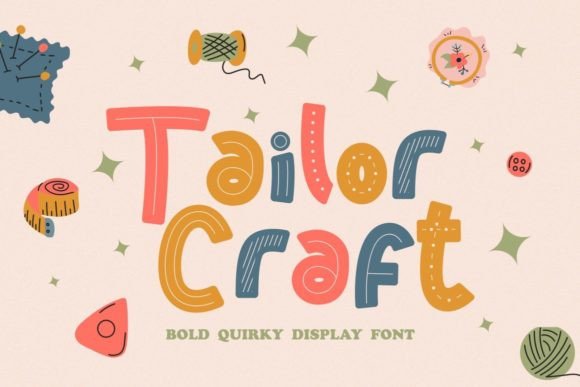
Tailor Craft is a friendly, handcrafted display font that blends personality with professionalism. Its rounded edges and slightly bouncy baseline give it a whimsical yet clean look. It’s ideal for small businesses that want to project approachability while maintaining a cohesive and modern brand image. Whether used in print or digital formats, Tailor Craft adds a touch of warmth that helps brands connect with their audience on a more personal level.
What sets Tailor Craft apart is that it’s PUA encoded, which means all its special characters and glyphs are accessible in design software without needing advanced coding. This makes it user-friendly, even for non-designers who are updating their own branding materials.
How Tailor Craft Works in Real Business Applications
We used Tailor Craft for the café’s menu headers, section titles, and promotional banners. The font worked beautifully in both large and small sizes, especially when paired with a clean sans serif font for body text. It gave the menu a balanced, modern feel that was easy to read and visually engaging.
- Product labels: Perfect for bakery boxes or candle jars where a friendly tone helps build emotional connection.
- Business cards: Adds a memorable visual touch that stands out in a stack of generic designs.
- Social media graphics: Ideal for Instagram stories or Pinterest pins where attention-grabbing headlines are key.
- Thank-you cards: Brings a personal, handcrafted feel to customer appreciation materials.
Typography Matters: Why Font Choice Impacts Brand Perception
Typography is more than just choosing a pretty font—it’s about how your brand communicates visually. First impressions are often made in seconds, and the right font can make your brand feel trustworthy, modern, or creative. Tailor Craft strikes a balance between playful and professional, making it versatile for a variety of small business needs.
For example, when we used Tailor Craft on the café’s menu, customers mentioned how “inviting” and “fresh” the new design felt. That’s the power of thoughtful typography—it subtly shapes how people perceive your brand, even if they don’t realize it.
Best Use Cases and Readability Tips
Tailor Craft shines brightest when used for short text such as headlines, logos, and packaging titles. It’s not ideal for long paragraphs or body copy, but as a display font, it’s perfect for grabbing attention and adding visual interest.
Here are a few tips based on our experience:
- Use at larger sizes: For best impact, use Tailor Craft on banners, headers, or product packaging where space allows for bold lettering.
- Avoid small print: On tiny labels or mobile screens, keep text short and ensure contrast with the background for readability.
- Pair wisely: Combine with a minimalist sans serif like Montserrat or Lato for a clean, modern contrast. For a more elegant touch, pair with a serif or script font.
What to Check Before Using Tailor Craft in Your Branding
Before diving into a full brand refresh with Tailor Craft, it’s important to review what’s included in the font package. Check for multiple weights, alternates, ligatures, and multilingual support if your audience is global. Also, ensure the font license allows for commercial use—especially if you're printing packaging, creating merchandise, or designing templates for sale.
We found Tailor Craft to be well-equipped for most small business needs. The variety of glyphs and stylistic options gave us creative freedom without complicating the design process. And because it’s a display font, it worked especially well in visual branding touchpoints like logos, social media, and product packaging.